My parents demanded I hand over the keys to my 3.M villa so my failed sister could turn it into rentals. When I refused, my father sla.pped me and ordered me to leave
The Signature
My parents forced me to give my failed sister the keys to my three-million-dollar villa.
"She can run short-term rentals there," Mom said, like she was assigning chores.
My sister, Brielle, sat on the couch with crossed legs and a smug smile. She'd failed at real estate, failed at event planning, failed at a candle business Dad funded twice. Now she wanted my oceanfront villa in Malibu.
The one I'd spent ten brutal years earning.
"No," I said.
Dad's face darkened. "Excuse me?"
"I said no."
Brielle scoffed. "You don't even use it every week."
"It's my home."
Mom sighed. "You always make things difficult."
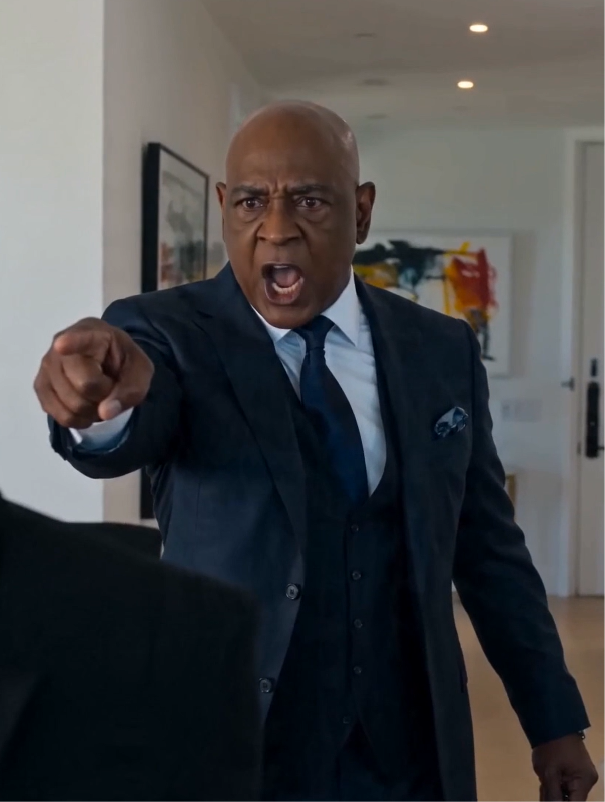
Dad stood. "Give her the keys."
"No."
The slap came so fast the room went silent.
My cheek burned.
Dad pointed at the door. "Get out — and step down as CEO."
I tasted blood, then smiled through the pain.
"Dad… did you forget?"
Brielle screamed, "Forget what?!"
I looked at her, then at him.
"You haven't owned the company in four years."
My father froze.
The family business, Whitmore Coastal Development, had almost collapsed after Dad buried it under debt and bad contracts. I rebuilt it. Bought out investors. Paid off lawsuits. And quietly gained controlling shares through a legal restructuring he signed himself, because he never bothered reading documents he assumed were "women's paperwork."
I pulled out my phone and called our general counsel.
"Evelyn," I said, "activate the emergency board protocol."
Dad's face went pale.
Mom whispered, "Natalie, what are you doing?"
"Protecting my company. And my house."
Within twenty minutes, Dad's access to company accounts was suspended. Brielle's consulting contract was terminated. Mom's corporate card was frozen.
Brielle stared at her phone. "My card declined."
I picked up my bag.
Dad's voice cracked. "Natalie, wait."
But I was already walking out.
Behind me, Brielle shouted, "You can't do this to family!"
I turned at the door.
"You stopped being family when he hit me and you waited for the keys."
I drove to a hotel that night, jaw still throbbing, adrenaline the only thing keeping my hands steady on the wheel.
I expected Evelyn to call with confirmation that the protocol had executed cleanly.
I did not expect what she actually found.
She called at eleven, voice tighter than usual.
"Natalie, I need you to sit down."
"I'm already sitting," I said. "What's wrong?"
"The consulting contract we terminated," she said. "Brielle's. I pulled the full payment history while processing the freeze."
"And?"
"It's not a consulting contract," Evelyn said. "It's a shell. Four years of payments, over two million dollars total, routed through her name into three different accounts we don't have visibility into."
I sat up straighter.
"Two million dollars," I repeated. "For consulting Brielle never actually did."
"Correct," Evelyn said. "And Natalie, the authorization signatures on the original contract aren't yours. They're your father's, from a period after the ownership restructuring, when he legally shouldn't have had signing authority at all."
I felt something cold settle in my chest, replacing the earlier hot fury entirely.
"How is that possible," I said slowly, "if he didn't own controlling shares anymore?"
"That's exactly what I want to find out," Evelyn said. "I think someone's been using his signature without full board authorization for years. I need forensic accounting on this immediately."
I didn't sleep that night.
I sat in that hotel room scrolling through digital copies of documents I'd trusted my legal team to manage competently for years, documents I'd never personally cross-referenced against every single signature line given how thoroughly I'd delegated that oversight once the company stabilized.
By morning, Evelyn had assembled a small forensic team, quiet, discreet, working outside normal company channels given the sensitivity of what we now suspected.
Three days later, she delivered findings that reframed everything I thought I understood about my own family.
Brielle's failed businesses weren't simply failures.
They were fronts.
Real estate. Event planning. The candle company. Each one had received company funds disguised as consulting fees, marketing partnerships, vendor contracts, money that flowed out of Whitmore Coastal and into accounts Brielle controlled, then largely disappeared into investments and expenses that had nothing to do with any legitimate business purpose.
Some of it, Evelyn's team discovered, had gone toward a luxury condo in Aspen registered under an LLC bearing no obvious connection to Brielle's name.
Other funds had disappeared entirely into what appeared to be high-stakes online gambling platforms, transaction records showing increasingly desperate, increasingly large withdrawals over the final eighteen months alone.
"How much total," I asked Evelyn, sitting across from her in a conference room with blinds drawn, security specifically arranged given what we now suspected about internal access.
"Just over four point one million dollars," she said. "Across six years."
I closed my eyes.
"And Dad's signature," I said. "How was he still signing things four years after losing controlling ownership?"
Evelyn hesitated before answering, something careful in her expression that made my stomach tighten further.
"I think you need to talk to his physician," she said. "Natalie, I think there might be more going on here than simple oversight."
I visited my father's longtime doctor personally two days later, using my authority as his emergency contact to request records I'd never previously thought to examine.
What I learned devastated me in an entirely different way than the slap ever had.
Richard Whitmore had been diagnosed with early-stage vascular dementia nearly five years earlier.
Five years.
A full year before I'd even completed the ownership restructuring he'd signed without reading.
"He was still largely functional during those early years," Dr. Ashford explained carefully. "Mild cognitive changes, occasional confusion, nothing that would have been immediately obvious to someone who didn't know what to watch for."
He pulled up additional records on his screen, turning the monitor slightly so I could see the progression charts documenting my father's gradual decline.
"Family members often miss the early signs entirely," he continued. "Especially when the person in question remains socially confident, still capable of masking confusion through charm or deflection."
That description fit my father with uncomfortable precision.
"Did my mother know?" I asked, voice barely steady.
Dr. Ashford checked his records.
"She was present at the diagnosis appointment," he confirmed. "Both times we discussed progression, actually. Most recently eight months ago."
I sat in my car afterward for a long time, unable to immediately process the full shape of what I now understood.
My mother had known, for years, that my father's cognitive capacity was declining.
She'd watched him sign documents, including the villa consulting contract Brielle had exploited for years, without ever flagging concerns about his diminished capacity to fully understand what he was authorizing.
Worse, someone had continued using his signature specifically because his condition made him an easy, unquestioning source of authorization for transactions that would never have survived genuine scrutiny.
I called Evelyn immediately.
"I need everything," I said. "Every document Dad's signed in the past five years. Every authorization, every contract, every check."
"Natalie," Evelyn said carefully, "this is going to implicate people you love."
"I know," I said. "Get me everything anyway."
The following weeks unfolded like slow-motion demolition, each new document revealing another layer of exploitation I hadn't previously imagined possible within my own family.
My mother had used my father's declining signature authority to authorize personal loans against company assets, funneling funds toward Brielle's increasingly desperate financial situation.
Brielle, it turned out, had accumulated significant gambling debts alongside whatever the failed businesses had cost, debts that explained the persistent, escalating demand for the villa specifically.
"She needed cash fast," Evelyn explained during one particularly difficult briefing. "The villa wasn't really about short-term rentals. Our investigator found records suggesting she'd already lined up a private buyer, someone willing to purchase quickly, quietly, no questions asked about ownership history."
"She was going to sell my house," I said, the full scope of the betrayal finally crystallizing completely. "Behind my back. Before I even understood what was happening."
"That appears to be the plan," Evelyn confirmed. "The short-term rental story was cover, something to justify the initial transfer without raising immediate suspicion."
She slid a printed document across the table, a preliminary purchase agreement dated nearly three weeks before that devastating family dinner, buyer information carefully redacted pending further investigation.
"They were moving fast," Evelyn added. "This deal was structured to close within thirty days of the transfer. Whoever was buying wanted minimal paper trail and maximum speed."
I stared at that document for a long moment, understanding fully now how close I'd come to losing everything without even understanding the true stakes involved that evening.
I thought about that Thursday evening dinner differently now, understanding the desperate energy underlying Brielle's insistence, my mother's uncharacteristic firmness, my father's confused but forceful anger.
They hadn't simply wanted my villa out of typical family favoritism.
They'd needed it, urgently, to cover debts and schemes that had been quietly accumulating for years beneath the surface of ordinary family dysfunction I'd simply accepted as unfortunate but ultimately harmless.
The decision I faced next felt considerably more complicated than anything the original confrontation had prepared me for.
Pursuing full legal accountability meant formally reporting financial fraud, initiating guardianship proceedings regarding my father's diminished capacity, potentially exposing my mother to criminal liability for knowingly exploiting his condition.
It meant, essentially, the complete and permanent destruction of whatever remained of my family, not through simple estrangement, but through formal legal proceedings that would follow all of them for the rest of their lives.
I sat with Evelyn late one evening, reviewing the final comprehensive report before deciding how to proceed.
"There's a version of this where you simply walk away," she said carefully. "Recover the stolen funds through private settlement, avoid the public proceedings entirely, let your father's guardianship happen quietly through separate channels without formal fraud charges attached."
"Would that protect him?" I asked. "From continued exploitation, I mean."
"It could," Evelyn said. "Assuming your mother and sister actually stopped once confronted privately."
I thought about that assumption for a long time.
Thought about years of excused failures, of financial rescue after financial rescue that I'd always assumed reflected simple poor judgment rather than active, ongoing exploitation.
Thought about my father, increasingly vulnerable, increasingly unable to protect himself from people who apparently viewed his condition as opportunity rather than tragedy requiring protection.
I thought too about every previous instance I'd excused as simple family dysfunction, wondering now how many of those moments had actually involved active exploitation I'd simply failed to recognize given how normalized certain patterns had become throughout my entire life.
"I don't think private settlement stops this," I finally said. "I think it just teaches them to be more careful next time."
I filed for formal guardianship over my father the following week, alongside comprehensive fraud documentation delivered to both civil and criminal authorities.
The fallout arrived swiftly and completely.
My mother faced formal charges related to financial exploitation of a vulnerable adult, the legal category specifically covering situations where someone knowingly leveraged another person's diminished cognitive capacity for personal financial gain.
Brielle faced considerably more serious charges, the sheer scale of embezzlement pushing her case toward felony territory regardless of any mitigating circumstances her attorney might attempt establishing.
My father, meanwhile, moved into a specialized care facility equipped to manage his ongoing cognitive decline, a transition Evelyn helped coordinate with considerably more compassion than I felt capable of managing personally given everything I'd just discovered.
I visited him there three weeks after the initial confrontation, uncertain exactly what version of my father I might encounter given the disease's unpredictable progression.
He was having a clearer day, recognizing me immediately, though confusion still lingered around more recent events.
"Natalie," he said, reaching for my hand as I sat beside his bed. "I heard something happened. With your mother. With Brielle."
I hesitated, uncertain how much truth someone in his condition could genuinely process without unnecessary additional distress.
"There were some financial problems," I said carefully. "I'm handling it."
He studied me for a long moment, something clearer than I expected surfacing behind his confused eyes.
"I signed things," he said slowly. "Things I didn't understand. I knew, sometimes, that I didn't understand them. I signed anyway because admitting confusion felt worse than simply trusting everyone around me."
I felt tears forming, unexpected given how thoroughly anger had dominated my emotional landscape throughout the preceding weeks.
"That's not your fault," I said. "None of this is your fault."
"I hit you," he said quietly, memory apparently surfacing with sudden, painful clarity. "I remember that part clearly. I don't understand why I did that."
"I don't fully understand either," I admitted. "But I don't think that particular moment came from confusion. I think that came from years of assuming your authority should never be questioned, regardless of whether you were actually right."
He nodded slowly, eyes drifting briefly toward the window before returning to meet mine directly.
"Your grandfather was the same way," he said quietly. "I swore I'd never become him. I suppose disease doesn't care much about the promises we make ourselves."
That admission surprised me, a fragment of self-awareness I hadn't expected given everything else clouding his cognition.
He absorbed that observation slowly, something like genuine grief crossing his weathered features.
"I'm sorry," he said. "For all of it. Even the parts I can't fully remember clearly enough to properly apologize for."
I squeezed his hand, understanding this conversation represented as much resolution as our complicated, damaged relationship could realistically offer given everything that had transpired.
"I know," I said. "I believe you."
I didn't visit as often as perhaps I should have during the following months, the emotional complexity of watching my father's continued decline alongside processing everything my mother and sister had done proving considerably harder to navigate than any straightforward business challenge I'd previously faced.
Whitmore Coastal continued operating throughout this entire period, Evelyn and our senior leadership team managing daily operations while I focused primarily on the overwhelming legal and personal fallout consuming most of my attention.
I found myself, during those difficult months, increasingly drawn toward an unexpected source of solace.
Down at the marina near my villa, an elderly boatwright named Samuel Okonkwo had maintained a small workshop for decades, restoring vintage sailing vessels for wealthy clients who valued craftsmanship over convenience.
I'd walked past his workshop countless times over the years, admiring the beautiful wooden boats without ever stopping to properly investigate the work itself.
The workshop smelled distinctly of cedar and varnish, sunlight filtering through salt-stained windows onto half-finished hulls arranged throughout the cramped space.
Samuel himself looked exactly like someone who'd spent five decades working with his hands, weathered and sturdy, movements economical despite his obvious age.
One particularly difficult evening, unable to face returning to my empty villa immediately after a devastating deposition regarding my mother's financial exploitation, I found myself wandering into his workshop instead.
"You look like someone who needs something to do with her hands," Samuel observed, barely glancing up from the hull he was carefully sanding.
I laughed despite everything, surprised by how accurately that simple observation captured my exact emotional state.
"I don't know the first thing about boat restoration," I admitted.
"Nobody does, until someone teaches them," he said. "Grab that sandpaper if you're staying."
I stayed for three hours that evening, learning basic sanding techniques, listening to Samuel's stories about decades of restoration work, finding something genuinely meditative about physical labor entirely disconnected from spreadsheets, legal documents, or family betrayal.
I returned the following week.
Then the week after that.
Within two months, Saturday mornings at Samuel's workshop became a fixed, essential part of my routine, something considerably more restorative than any formal therapy appointment might have offered given how thoroughly I needed something physical, tangible, entirely separate from the ongoing legal proceedings consuming my professional life.
"Why boats?" I asked Samuel once, months into our unlikely friendship, hands calloused now from months of genuine physical work.
"Because broken things can become whole again," he said simply. "Not the same as before. But whole, in their own new way. I find that comforting, given everything else in life that simply breaks permanently."
I thought about that observation often during the following year, understanding it applied equally well to my own complicated healing process.
Not the same as before.
But whole, in some new configuration I was still actively discovering.
Brielle's criminal case concluded eighteen months after the initial confrontation, a plea agreement resulting in five years imprisonment given the scale of documented fraud alongside her repeated exploitation of our father's declining cognitive state.
I didn't attend the sentencing.
Some distances, I'd learned, required protection rather than closure.
My mother's case resolved somewhat differently, reduced charges given her cooperation with investigators regarding the full scope of Brielle's independent gambling debts and additional financial schemes neither Susan nor I had fully understood during the initial investigation.
She received probation, mandatory financial counseling, and a formal restraining order preventing any future involvement with Whitmore Coastal's operations or finances.
I received one letter from her during that difficult year, delivered through her attorney rather than directly, given the legal complexities surrounding our fractured relationship.
"I told myself I was helping Brielle," she wrote. "I never let myself think clearly about what that help actually required, or what it cost you specifically. I don't expect forgiveness. I just wanted you to know I understand now, however late that understanding arrived."
She wrote about the counseling sessions mandated by her probation, small fragments of genuine insight scattered throughout otherwise careful, formal language clearly reviewed by her attorney beforehand.
"I keep thinking about the version of myself who could have simply said no to Brielle, years ago, before any of this became so complicated," one line read. "I don't know that woman well enough anymore to understand why she never existed."
I read that letter once, then filed it away without responding, uncertain whether any response felt appropriate given everything that had transpired.
My father passed away two years after the initial confrontation, his cognitive decline progressing faster than doctors had initially anticipated, complications ultimately overwhelming a body already weakened by the disease's relentless progression.
I sat with him during those final weeks, our complicated relationship finding whatever peace remained possible given circumstances neither of us had ever anticipated navigating together.
The nurses grew familiar with my regular visits, occasionally sharing small observations about good days versus difficult ones, helping me calibrate expectations before each conversation.
Some afternoons he recognized me instantly, sharp and present despite physical frailty. Other days he mistook me for my own grandmother, conversations drifting through decades he experienced as somehow simultaneously present.
"Thank you," he told me during one of his final coherent moments, "for protecting the company. Even from me, apparently."
"I wasn't protecting it from you," I said gently. "I was protecting you too. Even if it didn't always feel that way."
He seemed to understand that distinction, something like peace settling over his features during those final difficult weeks.
I delivered his eulogy myself, choosing honesty over comfortable simplification, acknowledging both the complicated damage and the genuine, if flawed, love that had characterized our relationship throughout my entire life.
"My father built something remarkable," I told the modest gathering of employees, longtime colleagues, and the handful of family members who remained willing to attend. "He also, later in life, became vulnerable to people who should have protected him instead of exploiting that vulnerability. Both things are true. I've spent considerable time learning to hold both truths simultaneously, without letting either one erase the other."
Three years after that devastating Thursday evening dinner, I stood in Samuel's workshop, examining the sailboat we'd spent the past eight months restoring together, my own hands now genuinely skilled rather than merely enthusiastic beginners fumbling through unfamiliar techniques.
"Ready for the water?" Samuel asked, admiring our completed work.
"Ready," I confirmed.
We launched that boat the following weekend, sailing along the coastline near my villa, salt air and physical exertion providing exactly the kind of uncomplicated satisfaction that had become increasingly rare throughout the preceding difficult years.
Whitmore Coastal continued thriving under my leadership, though I'd restructured significant portions of our financial oversight following everything discovered during the investigation, implementing safeguards specifically designed to prevent the kind of exploitation that had nearly destroyed both my company and my family simultaneously.
I established mandatory dual-authorization requirements for any transaction exceeding modest thresholds, regardless of seniority or family relationship to existing leadership.
Evelyn helped design an entirely new compliance framework, one specifically informed by everything we'd learned about how easily trust could be weaponized when oversight remained insufficiently rigorous.
"No one should ever be able to do what Brielle did again," she told me during one final debriefing. "Not through simple carelessness, and certainly not through deliberate exploitation."
I never fully reconciled with my mother, occasional brief communications the only remaining connection between us following everything that transpired.
I never spoke with Brielle again after her sentencing, though I understood, through secondhand updates from mutual acquaintances, that she'd eventually secured early release for good behavior, attempting some version of rebuilt life in a different state entirely.
I didn't wish her harm.
I also didn't feel compelled toward reconciliation given everything her choices had ultimately cost, both financially and emotionally, across years of exploitation I'd never previously recognized clearly enough to address.
My villa remained entirely my own throughout everything, the physical space itself gradually losing the uncomfortable associations from that devastating evening as new memories, new routines, new chosen relationships slowly accumulated within its walls instead.
Samuel became something like family himself over those years, our unlikely friendship providing exactly the kind of steady, uncomplicated support I'd apparently never received from actual blood relatives throughout my entire life.
Sometimes, sanding another hull alongside him on quiet Saturday mornings, I thought about that single devastating slap, about the question that followed, about everything that unfolded from that one moment of finally, completely refusing to simply comply with expectations that had never actually served my genuine wellbeing.
"Did you forget?" I'd asked my father that evening, believing at the time I was simply reminding him about company ownership.
Looking back now, I understood I'd actually been asking something considerably larger, something about whether any of them had ever genuinely seen me clearly at all, beyond whatever usefulness or convenience I represented within their ongoing, complicated dysfunction.
The answer, ultimately, had been devastating.
But it had also, eventually, proven clarifying in ways I couldn't have anticipated during that initial painful confrontation.
Not everything broken becomes whole again in exactly its original shape.
Sometimes, like the boats Samuel taught me to restore, broken things become something else entirely, still valuable, still capable of genuine purpose, simply transformed rather than perfectly repaired.
I sailed that restored boat often during the years that followed, watching the coastline that held both my greatest achievement and my most devastating family betrayal, understanding gradually that both realities could exist simultaneously within the same complicated, ultimately worthwhile life.
Samuel passed away peacefully four years after our first meeting, his workshop eventually transferred, through his own careful planning, into a small foundation teaching traditional boatbuilding skills to at-risk youth throughout the region.
I funded that foundation generously, understanding it represented exactly the kind of legacy worth continuing, patient craftsmanship offered freely to people who might otherwise never encounter such steady, grounding mentorship.
I still visit the workshop occasionally, now run by two of Samuel's former apprentices, the smell of cedar and varnish immediately transporting me back toward those difficult, transformative Saturday mornings that had once felt like my only reliable anchor during genuine crisis.
Whitmore Coastal celebrated its fiftieth anniversary the following year, a milestone I addressed carefully during the company celebration, acknowledging both the founding vision my father once possessed and the difficult, necessary corrections required to protect that legacy properly moving forward.
"Companies, like families, sometimes require honest reckoning before genuine health becomes possible," I told the assembled crowd. "I've learned that lesson more thoroughly than I ever expected to, though I remain grateful for wherever that difficult education ultimately led."
The villa itself underwent renovations that year too, not because anything remained physically wrong with the space, but because I finally felt ready to reshape it entirely according to my own evolving sense of what home actually meant.
I added a small workshop off the back terrace, space enough for basic woodworking projects, a quiet tribute to everything Samuel had taught me during those essential years of unlikely friendship and gradual healing.
Sometimes late in the evening, working quietly on some small project in that space, I think about the version of myself who once stood frozen in her parents' living room, cheek still burning, world about to fundamentally shift beneath her entirely.
She had no idea, that evening, exactly how far the consequences would eventually extend.
Nhận xét
Đăng nhận xét